
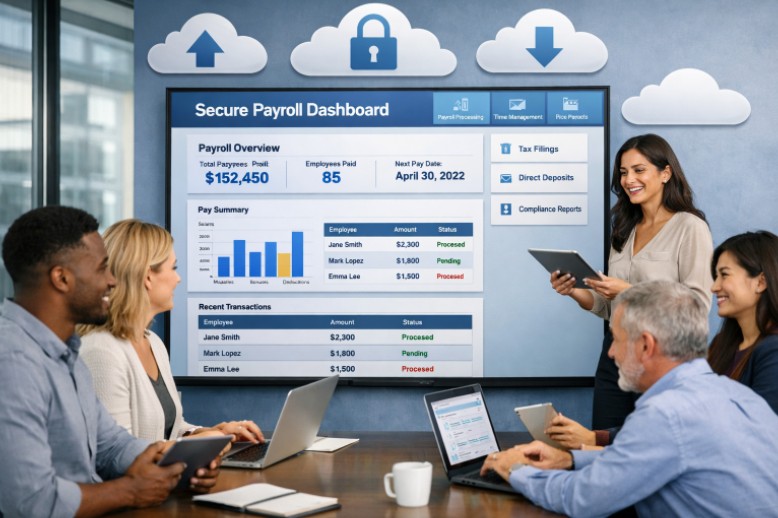
In today’s rapidly evolving business landscape, staying competitive means leveraging the right technologies. One area seeing significant transformation is payroll management. Organizations are increasingly adopting flexible solutions such as cloud payroll solution platforms to optimize how they track, process, and report compensation.
Modern employees expect convenience, transparency, and security in every interaction with their employers—including payroll. Cloud payroll technology not only meets these expectations but also empowers companies to keep pace with regulatory demands and workforce changes. By integrating their payroll systems with cloud-based tools, organizations can support agile working models while keeping costs down.
This shift to digital solutions supports strategic business goals. Companies benefit from increased operational efficiency and better compliance, and they can free their HR teams to focus on high-value initiatives rather than manual data entry. Below, we delve into the key ways cloud payroll platforms improve the employee experience and strengthen business operations.
Ultimately, cloud payroll empowers a diverse workforce by giving employees more real-time access to their compensation and HR information, which fosters trust and engagement. Employers can also take advantage of integrated data insights for smarter workforce planning and resource allocation. Advanced systems like these help future-proof businesses as they adapt to changes in the marketplace.
Enhancing Transparency and Trust
Trust is foundational to employee engagement. By utilizing cloud payroll technology, organizations allow team members to directly access their pay records, deductions, and tax information whenever needed. This level of transparency eliminates confusion, streamlines HR inquiries, and improves the overall sense of fairness and openness within a company. Employees no longer have to wait for monthly or quarterly statements; they can log into a secure portal and view details in real time.
Scalability to Meet Business Needs
One of the most significant benefits of cloud payroll solutions is the ability to easily adjust to workforce changes. Whether businesses are scaling rapidly or navigating seasonal workforce fluctuations, cloud-based systems are designed for flexibility. This scalability helps avoid costly infrastructure upgrades and minimizes downtime, which is critical for maintaining accurate and timely payroll processing across all business units.
Integration with HR Technologies
Cloud payroll systems often include or connect with a suite of HR management tools. This integration allows for seamless data sharing between payroll, attendance tracking, benefits administration, and performance management. The unification of HR functions not only reduces manual data entry but also enhances analytics and reporting, helping leaders make proactive, data-driven decisions about their workforce.
Ensuring Compliance with Regulations
Labor and tax regulations are constantly evolving and can differ by region and industry. Cloud payroll platforms are regularly updated to align with the latest legal requirements, reducing the chance of compliance errors. Automated processes ensure that statutory deductions, tax filings, and recordkeeping meet legal standards—keeping businesses ahead of regulatory changes and lessening the odds of costly penalties.
Supporting Remote and Hybrid Work Models
The rise of remote and hybrid working has made traditional, on-premises payroll systems less viable. A cloud-based system can be accessed securely from anywhere in the world, giving both employees and HR managers the flexibility to handle payroll processes regardless of location. This is especially important for globally distributed teams and businesses that rely on mobile workforces.
Data Security and Privacy
Protecting sensitive employee and payroll data is non-negotiable. Cloud payroll solutions use advanced encryption, multifactor authentication, and frequent security audits to prevent breaches and unauthorized access. Employees and employers alike can feel confident that personal and financial data are kept secure, helping organizations maintain trust and meet privacy law requirements.
Cost-Effectiveness and Resource Optimization
Cloud payroll eliminates the ongoing expenses of maintaining physical servers and manual paperwork. Automated processes reduce the likelihood of costly errors, while the centralized nature of the system lets HR staff spend more time on value-adding projects like recruitment and employee engagement. These solutions ultimately help optimize both human and technological resources.
Improving Payroll Reporting and Analytics
Another compelling advantage of cloud payroll is the ability to generate real-time, detailed reports with just a few clicks. Advanced analytics enable HR leaders to identify workforce trends, optimize compensation strategies, and forecast payroll expenditures with a higher degree of accuracy. These capabilities allow organizations to make more informed, proactive decisions, improving both individual and organizational outcomes. Additionally, this data-driven approach supports effective budget management and helps companies identify opportunities for further process improvements, ultimately contributing to long-term sustainability.
Supporting Employee Self-Service
Cloud payroll platforms bolster the concept of employee self-service, making it easier for team members to manage their personal data, update banking information, download tax forms, or review benefit selections on their own schedule. This autonomy reduces administrative bottlenecks and empowers employees to take greater ownership of their work-life experience. As workforce demographics continue to shift and digital-native employees make up a greater percentage of staff, the demand for user-friendly self-service options will only increase. Organizations that leverage these capabilities position themselves as responsive employers of choice.
Conclusion
Embracing a cloud payroll strategy is more than a technological upgrade—it is an investment in workforce empowerment and organizational resilience. Cloud payroll systems reinforce transparency, flexibility, and compliance, enabling organizations to deliver outstanding experiences for their teams and remain competitive in a changing business environment.